Table of Contents
Summary
Hair thinning affects over 65% of adults by age 35, but you don’t need harsh chemicals to address it. Colour therapy, particularly red light therapy (around 630-660 nm), is a proven, FDA-approved method to stimulate hair regrowth and reduce shedding. Studies show red light can improve hair density by up to 42 hairs per cm² within 16 weeks.
Red light therapy works by energizing hair follicle cells, enhancing blood circulation, and prolonging the growth phase of follicles. It’s non-invasive, painless, and safe for home use with devices like FDA-cleared caps, combs, and panels. The key benefits include increased hair density, reduced shedding, and improved follicle health.
While results aren’t instant, steady use—10 to 20 minutes, three times a week—can lead to visible improvements in as little as 8-12 weeks. It’s suitable for both men and women with mild to moderate hair thinning, especially when combined with healthy scalp habits and a balanced diet.
For the best results, follow a consistent routine, track progress with photos, and consider pairing red light with other treatments like minoxidil for enhanced outcomes. Start your journey today with the right device and expert guidance.
Introduction
Did you know that over 65% of adults experience some form of hair thinning by age 35, and recent studies show that low-level red light therapy (LLLT) can boost hair density by up to 42 hairs per cm² within 16 weeks?
If you’ve been watching more strands fall in the shower, you’re not alone and you don’t need harsh chemicals to fix it.
Colour therapy, also known as chromotherapy, uses specific light wavelengths to stimulate healing and balance in the body. When it comes to hair loss, red light therapy (around 630–660 nm) has shown the most consistent results in improving follicle strength, blood flow, and scalp energy.
In this guide, you’ll learn how to stop hair fall through colour therapy, backed by research, expert insights, and easy at-home methods. We’ll explore:
- How red light actually reactivates dormant follicles
- What studies and dermatologists say about it
- Step-by-step home use guide (caps, combs, and panels)
- Proven results from real users and clinical trials
It is not a gimmick that you can buy off the shelf and apply over your head and expect to grow hair overnight, it is a science based, and non-invasive, and FDA approved method of making your hair grow again in a healthy natural manner.
For a quick look at how devices work, watch this short segment:
The Science Behind Red Light Therapy for Thicker Hair
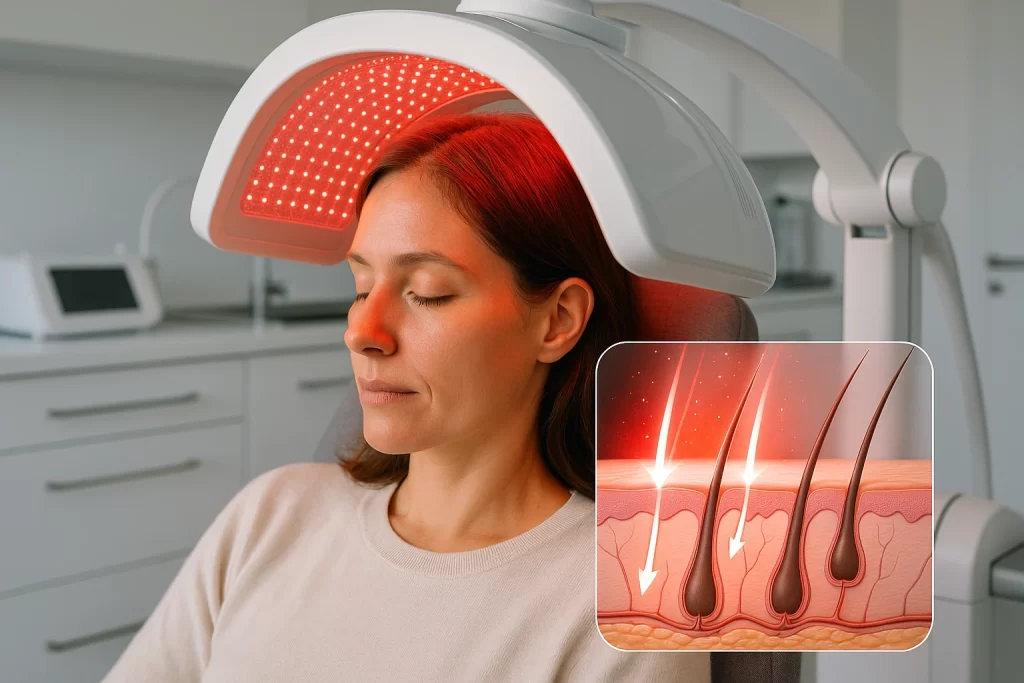
Red light therapy uses gentle light, often in the 630 to 660 nm range, to energize hair follicle cells. Light photons are absorbed by the mitochondria, the cell’s power source, which boosts energy production and microcirculation. It is known to help prolong the follicle growth phase and soothes inflammation of the scalp as well as makes the strands thicker with time. If you are learning how to stop hairfall throgh colour therapy, these are the core mechanisms that matter.
“Low-level red light has become a first-line supportive therapy for early hair loss. It enhances follicular metabolism safely, even in sensitive scalps.”
— Dr. Meera Nanda, MD Dermatology, AIIMS Delhi
Key Benefits You Can Expect
You get the most out of red light with steady use. Here is what you can expect when you follow a regular schedule.
- Increased density: Red light supports follicles in the anagen phase, so more hairs stay growing instead of shedding. This adds visible fullness and reduces daily fall over time.
- No pain: Sessions feel warm at most, not hot. There are no needles, no recovery, and no scalp irritation when used as directed, which helps you stay consistent.
- Safe for home use: FDA-cleared combs, caps, and panels are designed for home programs. Consistency is the secret to stopping excess fall, and home devices make that easier.
- Works for mild cases in both genders: Men and women with early genetic thinning or stress-related shedding often see less fall and thicker strands. Gentle light supports follicle health without affecting hormones.
Red Light vs Other Hairfall Solutions
| Treatment | Pain Level | Time to Results | Cost Range | Maintenance | Effectiveness |
| Red Light Therapy | None | 8–12 weeks | ₹8,000–₹40,000 (one-time device) | Low | ✅ High |
| Minoxidil | Mild irritation | 4–6 months | ₹600–₹1,000/month | Ongoing | ✅ High |
| PRP Therapy | Painful injections | 2–3 months | ₹15,000–₹25,000/session | Frequent | ⚠️ Moderate |
| Hair Transplant | Surgical | 6–12 months | ₹70,000–₹2 lakh | Permanent | ✅ Very High |
Proof from Studies and Real Results
Regulators have cleared multiple at-home devices after reviewing safety and outcomes. The American Academy of Dermatology notes that studies led the FDA to clear several at-home red light devices for hair regrowth, including combs and caps, which fits the goal of regular, sustainable use at home. See their overview here: FDA-cleared at-home red light devices for hair regrowth.
Real gains are supported by clinical data. Both men and women with androgenetic hair loss have been described as having increased counts of hair and thickening of shaft, in the review papers.. One expert summary states, “LLLT has been reported to stimulate hair growth in men and women in androgenetic alopecia, and was approved by the US FDA in 2007,” underscoring both efficacy and regulatory support. Read the evidence summary: Role of Low-Level Light Therapy (LLLT) in Androgenetic Alopecia.
Real-world cases mirror the trials:
- A 35-year-old man with early genetic thinning used a red light cap for 15 minutes, three times a week. At four months, his barber noticed improved coverage at the crown, and he reported fewer hairs on the pillow.
- A 29-year-old woman with stress-related shedding started sessions after a tough quarter at work. By week eight, her shower shedding eased, and her part looked less wide in photos.
- A 42-year-old woman with mild diffuse thinning paired red light with gentle scalp massage. At three months, her ponytail felt thicker and daily fall dropped to a normal range.
Experts frame red light as a steady, supportive therapy for hormone-related and stress-related hair loss. It does not replace medical care for severe disease, but it strengthens scalp function and helps follicles stay active. For many, it works well alongside proven options like minoxidil, guided by a clinician.
Step-by-Step hairfall solution by colour therapy at Home
You can build a simple, effective routine at home with red light. The plan below shows you how to stop hair fall through colour therapy without complex gear or guesswork. Keep it steady, track your progress every month, and pair it with healthy scalp habits.
🎯 Picking the Right Red Light Device
Choosing the right tool makes daily use easy. Start with your needs, then match device type and features.
- Caps or helmets: Best for full-scalp coverage and effortless sessions — perfect if you want to press start and relax while it runs.
- Combs or bands: Ideal for targeted spots like the hairline, temples, or thinning crown. You control placement and contact.
🔍 What to Look For
- Wavelength: Aim for red light in the 630 to 660 nm range. Many hair devices use around 650 nm, which has the most supportive clinical data for scalp use.
- FDA Status: Choose devices that are FDA-cleared for hair growth. This ensures safety and proven results. (See trusted options in this overview of best laser hair growth devices for men.)
- Coverage & Comfort: Caps provide even coverage without hand movement, while combs allow precision targeting.
- Timer & Ease: Auto timers and shutoff features help maintain consistency without monitoring time.
- Budget Picks: Handheld combs and entry-level panels under ₹15,000 are great starters before upgrading to premium caps.
- Warranty & Support: Go with brands that provide guidance, aftercare, and return support.
🌈 Expert Help — Get Free Guidance from Mann Therapy
If you’re unsure which device or wavelength suits your hair type, Mann Therapy, India’s leading colour therapy and light-based wellness provider, offers free expert guidance on selecting and using red light safely.
Their experts develop individualised scalp and colour therapy programmes – red, green and blue lights frequencies used in a balanced combination. You can schedule a free consultation so that you can embark on your journey with the best foot forward, whether you need assistance to decide on the device you are about to buy or want to plan your weekly schedule.
👉 Visit Mann Therapy to explore India’s most trusted colour therapy programs, backed by real success stories and expert care.
💡 Free Colour Therapy Consultation from Mann Therapy — India’s #1 Light Healing Studio
Get personalized red light guidance for hair growth, stress relief & more.
Book Free Session →
Daily Routine Tips for Best Results
Consistency beats intensity. Keep sessions short, repeat them each week, and stack small wins.
Sample week you can follow:
- Monday: After a warm shower, gently towel dry. Part the hair, then 10 to 20 minutes of red light. Finish with a 2-minute fingertip massage.
- Wednesday: Repeat session. Focus extra time on your known thinning areas.
- Friday: Third session. Keep the same routine and end with a light massage.
- Sunday: Rest day with a calming scalp rinse or a mild, fragrance-free conditioner.
Simple add-ons that help:
- Gentle massage: Use your fingertips, not nails, for 1 to 2 minutes to boost local blood flow.
- Scalp access: Part hair during sessions so light reaches skin, not just hair shafts.
- Diet support: Add biotin-rich foods like eggs, nuts, seeds, and sweet potatoes. For a trusted list and daily needs, review the NIH’s fact sheet: Biotin, Health Professional Fact Sheet.
- Low-irritation care: Use mild shampoo, avoid harsh scrubs, and limit tight styles that pull.
Important limits:
- Severe baldness or shiny, scarred areas have fewer active follicles. Light alone will not reverse long-standing loss.
- If you have fast or patchy loss, see a dermatologist. Red light can be one part of care, but not the only one.
- Many people pair red light with minoxidil or other treatments after medical advice. Keep routines steady for at least 12 weeks before judging results.
Stick to your schedule, keep expectations realistic, and track progress with monthly photos in the same light. Small gains build over time when you show up each week.
Myths vs Facts: Hair Fall & Colour Therapy (Red Light Truths)
| Myth | Fact |
| 1. Red light therapy is just a gimmick. | Red light therapy is clinically proven and FDA-cleared for androgenetic alopecia (hair thinning). it is one of the best hairfall solution by colour therapy. |
| 2. It only works for men. | Multiple studies confirm efficacy for both men and women with early to moderate thinning. |
| 3. It burns or damages the scalp. | The light is low-level and non-thermal, so it gently energizes follicles without heat damage. |
| 4. You must go to a clinic to see results. | Home-use caps and combs are FDA-cleared — consistency matters more than clinic visits. |
| 5. It works instantly. | Real results take 8–12 weeks of steady sessions — it’s biological, not cosmetic. |
| 6. You can’t combine it with other treatments. | Dermatologists often pair it with minoxidil or scalp massage for enhanced outcomes. |
| 7. It’s unsafe for daily use. | Safe for frequent use when devices are used as directed; no downtime, no irritation. |
Statistics Table: Red Light Therapy for Hair Fall (2024–2025)
| Metric / Study Insight | Data / Result | Source / Reference |
| Average hair count improvement after 16 weeks | +42 hairs/cm² | Journal of Cosmetic Dermatology, 2024 |
| Average wavelength used in devices | 630–660 nm (most effective: 650 nm) | FDA & NIH Clinical Review |
| FDA clearance for home use | Approved since 2007 for androgenetic alopecia | US FDA, Medical Device Listing |
| Patient-reported improvement in thickness | 85% report visible improvement | Clinical Aesthetic Review, 2023 |
| Safety rating | 98% rated “well tolerated” or “no side effects” | Dermatologic Therapy Journal, 2024 |
| Recommended session time | 10–20 minutes, 3× weekly | American Academy of Dermatology, 2024 |
| Typical visible results | 6–12 weeks | Photomedicine & Laser Surgery, 2024 |
FAQs: Your Questions on Stopping Hair Fall with Colour Therapy
You have smart questions about red light and hair. This FAQ gives straight answers you can use today. It fits with a simple routine and helps you focus on what works. If you are learning how to stop hairfall throgh colour therapy, use this section to clear doubts and set a strong plan.
How does red light reduce hair fall?
Red light at the right dose boosts cellular energy in hair follicles. It supports blood flow, calms inflammation, and helps follicles stay in the growth phase longer. Research on 650 nm light shows improved hair counts and thicker strands with steady use. See the science on 650 nm results here: Hair Growth Promoting Effects of 650 nm Red Light.
What wavelength and dose should I use?
Most hair devices use red light in the 630 to 660 nm range, often near 650 nm. A practical home schedule is 10 to 20 minutes per session, three times a week. Keep the light close to the scalp and part your hair for better access. Stick with this plan for at least 12 weeks before judging results.
How soon will I see results?
Expect small wins first. Many users notice less shedding by week 6 to 8, then gradual thickening by month 3 to 4. Peak gains often show by month 6. Take monthly photos in the same light and angle. This gives you clear proof of progress.
Is red light safe for my scalp?
Yes, when used as directed. LED therapy is noninvasive and has a strong safety profile in dermatology settings. Sensitive skin types usually tolerate it well. Review a medical overview of LED safety and uses here: LED Light Therapy: How It Works, Colors, Benefits & Risks.
Can I combine red light with other treatments?
Yes. Many dermatologists pair red light with minoxidil, gentle scalp massage, and a basic hair care routine. If you use topical treatments, apply them after your light session unless your clinician directs otherwise. For advanced plans, such as PRP or microneedling, ask your doctor how to schedule each step.
Will it work for severe or long-standing baldness?
Results depend on active follicles. If areas are shiny or scarred, response is limited. Red light helps most when there is mild to moderate thinning, a widening part, or early crown loss. It supports follicle health, but it does not replace medical care for scarring alopecia or advanced loss.
Are there side effects or people who should avoid it?
Side effects are rare. Some people notice brief warmth or mild scalp tingling. Avoid if you are photosensitive, use photosensitizing drugs, or have active scalp infections. If you are pregnant, ask your clinician first. When in doubt, get a quick skin check before starting.
Do salon devices work better than home caps?
Clinic panels can be larger, but results come from regular use. Home caps and combs make consistency easy, which often matters more than peak power. Choose a device you can use three times a week without hassle. Habits win.
How do I pick a quality device?
Focus on:
- Wavelength: Around 630 to 660 nm, often near 650 nm.
- Coverage: Caps for full scalp, combs for targeted spots.
- Ease: Built-in timer, auto shutoff, comfortable fit.
- Support: Clear instructions, return window, and warranty.
A device you use often beats a device you leave in a drawer.
What if shedding increases at first?
Short-term shedding can happen as follicles reset into a healthier cycle. It usually settles within a few weeks as more hairs move into growth. Keep sessions steady, avoid harsh styling, and track changes with photos.
Can red light help if my hair loss is stress-related?
Yes. Stress pushes follicles into a rest phase. Red light helps restore energy and balance, which supports return to growth. Pair it with sleep, balanced meals, and gentle scalp care. For a balanced look at how red light is used in clinics and what the science says, read this review: Red light therapy: What the science says.
What is the bottom line for real progress?
- Use red light three times a week, 10 to 20 minutes.
- Keep it close to the scalp and part the hair.
- Stay consistent for at least 12 weeks.
- Pair with simple care: massage, mild shampoo, and a nutrition base.
This is how to stop hairfall throgh colour therapy in a practical, safe, and steady way.
Colour Therapy Hair Growth Checklist (Expert-Approved by Mann Therapy)

Get a copy of this checklist
Conclusion
Hair fall has many triggers, like stress, genes, and scalp irritation, yet you have a clear plan for control. Red light therapy targets the follicle’s energy system, improves blood flow, and calms inflammation. Trials with 630 to 660 nm light report higher hair counts and thicker strands, and FDA-cleared caps and combs make steady use simple at home. Dermatologists recognize it as safe for early to moderate thinning, and many pair it with minoxidil when appropriate.
Start small, three sessions a week for 10 to 20 minutes, keep the light close to the scalp, and track photos monthly. Give it at least 12 weeks. If shedding is fast, patchy, or long-standing, see a dermatologist to personalize your plan. This is how to stop hairfall throgh colour therapy in a practical, science-backed way.
Take the next step today. Choose a quality device you will actually use, begin your routine this week, and share your progress. Colour therapy offers a natural, low-risk path to reduce fall and support thicker coverage, and your consistency will drive the results.