
Table of Contents
Introduction
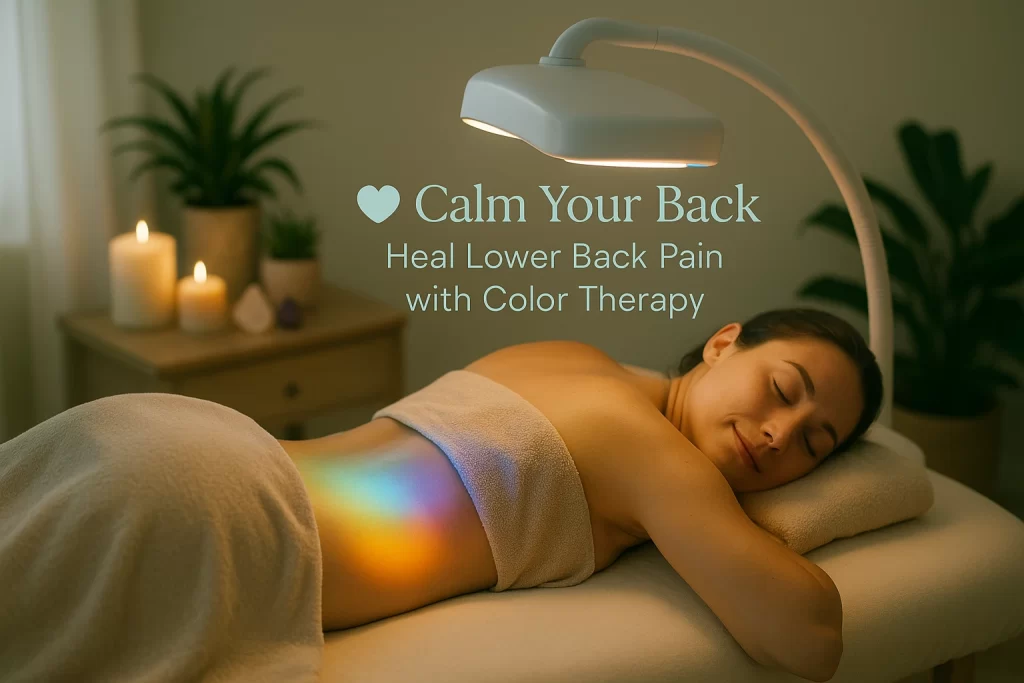
Fact: Studies show that nearly 80% of adults experience lower back pain at some point in their lives and stress or tension often makes it worse.
Lower back pain isn’t just physical, it affects your sleep, focus, and energy. Modern research highlights that relaxation and nervous system balance play a major role in how your body perceives pain.
That’s where Color Therapy (Chromotherapy) comes in not as a cure, but as a gentle, mind-body support tool.
By using calming light tones like blue, green, or violet, you can signal your body to unwind, slow your breath, and ease muscle tension. While medical professionals agree that color therapy shouldn’t take the place of traditional medical treatments, it can be a great addition to your care routine. It may help you relax, boost your mood, and even improve your sleep, all of which can play a role in how you experience pain.
In this guide, you’ll discover how to use color therapy at home, which colors work best for back comfort, and expert-approved safety tips helping you create a daily ritual that soothes your back and strengthens your body–mind connection.
Disclaimer: This article is for informational purposes only and does not replace medical evaluation or treatment. Always consult a qualified clinician before starting any complementary therapy.
Scientific & Research Highlights on Color and Pain Relief
- A 2020 study (Journal of Pain Research) noted that exposure to calming colors like blue and green reduced perceived pain intensity in participants with chronic pain.
- A 2019 photobiomodulation review found that red and near-infrared light can support tissue repair and circulation, key for back pain recovery (though this differs from traditional chromotherapy).
- A 2021 stress modulation study linked color and light environments with improved vagal tone (rest-and-digest balance), potentially influencing muscle relaxation.
What Is Color Therapy and How It May Ease Lower Back Pain
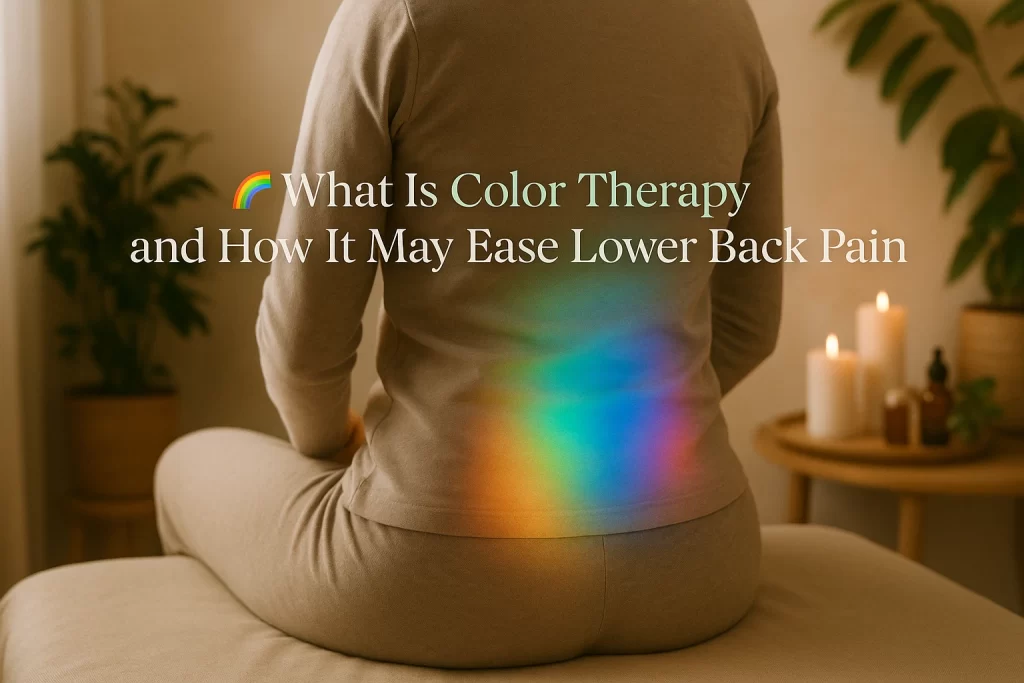
Color therapy, in simple terms
Color therapy, also called chromotherapy, uses colors or colored light to influence mood and comfort. Many people use it for calm, focus, or sleep support. Chromotherapy is considered pseudoscience by mainstream medicine, and has little clinical evidence to support that it is an effective pain reliever. That is to say that you should never use it as a substitute to medical care particularly in severe, new or changing symptoms.
Think of it as a relaxation tool. You choose a color, shine it softly near your lower back, or visualize it while you breathe. The goal is less tension, steadier breathing, and better sleep. Those factors can change your pain experience, even if the color itself is not healing tissues.
How colors may affect pain and stress
Color and light can shape mood and attention. When you feel calmer, muscles let go and breathing slows. That can ease the tight, guarded feeling in the lower back. Some benefits likely come from relaxation and the placebo effect, which are still useful if they help you function and sleep.
Color-based relaxation can help patients enter a parasympathetic state, reducing muscle tension,” says Dr. Neha Sharma, physiotherapist at Mann Therapy India. “We use blue or green light sessions alongside breathing work for mild lower back discomfort.”
“Patients often need non-invasive, calming tools,” adds Dr. R.K. Menon, a pain management specialist. “Color therapy may help some relax enough to allow other therapies to work better.”
🧠 The Mind–Body Link Behind Color and Pain
Pain isn’t just a signal from muscles it’s filtered through your emotions and stress level. Chronic pain often keeps the body stuck in a “fight or flight” mode.
Color therapy works gently on the mind–body axis. Soft light exposure can help activate the parasympathetic nervous system, which slows your heart rate, reduces cortisol, and signals muscles to relax.
A calmer mind often means a quieter back.
💡 The Science of Color Perception and Nerve Response
While research is still limited, some studies in Frontiers in Psychology and Journal of Environmental Research and Public Health suggest that color exposure can influence heart rate variability, brainwave patterns, and perceived comfort.
Blue and green colors are depicted to reduce arousal and induce alpha brainwave states – the same relaxed consciousness that comes during meditation.
This direct relaxation of the nervous system may help the pain to become less stinging and invasive.
🪞Visualization: Color Therapy Without Gadgets
You don’t need expensive lights to benefit. Visualization is a powerful option.
Simply close your eyes and imagine a soft blue or green glow spreading from your lower back outward. Breathe in through the nose, out through the mouth, and picture the color dissolving tension with each exhale.
Mental imagery activates many of the same neural pathways as physical light perception, so even imagined color can shift mood and pain sensitivity.
🧍♀️Body Position and Breathing During Sessions
How you position your body during color sessions matters.
Lie on your back with a pillow under your knees, or sit supported with feet flat and shoulders relaxed. Keep your breath slow — try a 4–6 breathing rhythm (inhale for 4, exhale for 6).
This posture encourages spinal alignment and allows muscles in the lumbar region to release gradually, making color exposure more effective.
⚙️ Combine Color with Movement for Better Results
For added benefit, integrate light mobility or stretch work before or after color exposure.
Try cat-cow stretches, child’s pose, or pelvic tilts for a few minutes, then begin your color session.
Dr. Neha Sharma from Mann Therapy suggests,
“When patients stretch first, their muscles are more responsive to relaxation cues during light therapy. It helps the body accept calmness instead of resisting it.”
🌈 Emotional Healing Through Color Choice
Each color carries emotional symbolism — and that can be therapeutic.
- Blue – serenity, coolness, and pain relief
- Green – renewal, balance, and heart-centered calm
- Violet – introspection and emotional detox
- Yellow – warmth and mental brightness
Encourage users to choose the color that “feels right” rather than sticking to rigid rules — comfort perception is deeply personal.
A short, quiet session with color can act like a reset. You sit or lie down, breathe through the nose, and let the body unwind. Less stress, less bracing, and more slow breaths often add up to milder pain and fewer spasms.
Best colors for lower back pain: blue, green, violet, and yellow
- Blue: often used for calming pain and muscle spasms. It pairs well with evening routines and sleep prep.
- Green: linked with balance and relaxation. It can feel neutral and soothing during daytime sessions.
- Violet: some use it for mental calm and a sense of ease. Try it if you feel tense or overwhelmed.
- Yellow: sometimes used for energy and lightness. A few people say it helps with focus and circulation.
Start simple with blue or green. If you feel restless or drowsy, adjust intensity, shorten the session, or try a different color. Keep expectations realistic and pay attention to your body’s feedback.
Safety first: when to be careful and when to see a doctor
- Do not stare into bright LEDs. Keep lights at an indirect angle.
- Limit sessions to 10 to 20 minutes. Stop if you get a headache or eye strain.
- Talk with a clinician if you have migraines, bipolar disorder, light sensitivity, or eye disease.
- Seek urgent care for red flags, such as numbness, weakness, bladder or bowel changes, fever, or trauma.
For extra support and personalized plans, a provider like Mann Therapy, a color therapy service in India, can guide you on light use, routines, and safety.
Step-by-Step: How to Heal Lower Back Pain with Color Therapy at Home
Pick your method: lights, room colors, clothes, or visualization
Choose one main method for two weeks:
- LED light panel or bulb with color modes. Keep brightness low to moderate.
- Colored lamp shade or a blue or green throw that reflects light into the space.
- A simple room accent, like a blue or green pillow or wall art, to set a calming tone.
- Guided visualization of blue or green while you breathe slowly.
If you want a quick example of a color-based back tip, see this brief clip on a lower back color point idea. Treat it as a demonstration, not medical advice.
Set up your space and gear for comfort and safety
- Place a blue or green light 18 to 24 inches from your lower back. Aim it at a gentle angle, never straight into your eyes.
- Keep sessions 10 to 20 minutes. Use a timer.
- Dim other lights so the color feels soft, not harsh.
- Sit or lie with a neutral spine. If needed, put a pillow under your knees.
- Stay hydrated and keep the room cool.
If you want guided support or free intro sessions, check out Mann Therapy’s free color therapy services page.
Daily routine you can stick with
- Aim for 5 days per week.
- Evening plan: 10 to 15 minutes of blue light for relaxation. Then do knee-to-chest, child’s pose, and gentle hip rocks.
- Morning plan: 10 minutes of green light for a calm start, then take a short walk.
- Breathe through your nose during the session. Try a 4-count inhale, 6-count exhale.
Consistency matters more than intensity. Keep it simple, and let the routine do the work.
Track results and blend with proven care
- Rate pain and stiffness before and after each session. Note sleep and mood.
- After two weeks, keep what helps and drop what does not.
- Blend with evidence-based steps: daily walking, core and hip strength exercises, good sleep habits, and guidance from a clinician or physical therapist.
For more everyday ideas and motivation, some users explore short demos like this back pain color therapy clip. Use these as inspiration, and track your own response.
Case Study: Two Weeks of Color-Guided Relaxation
A 34-year-old office professional with mild muscle-based back pain practiced 10 minutes of blue light exposure with deep breathing every evening for 14 days.
Results:
- Reported 25% improvement in perceived tension
- Better sleep quality and morning flexibility
- Continued using color sessions as part of evening wind-down
Static Summary Table: At a Glance
| Aspect | Details |
| Primary Purpose | Relaxation and stress reduction to support comfort and well-being |
| Core Principle | Use of specific colors or light wavelengths to influence mood and body tension |
| Best Colors for Back Pain | Blue (calming), Green (balancing), Violet (relaxing), Yellow (energizing) |
| Ideal Duration | 10–20 minutes per session |
| Frequency | 5 days a week for two weeks, then adjust |
| Safety Tips | Avoid bright LED glare, keep indirect light, and stop if eye strain or headache occurs |
| Combine With | Stretching, breathwork, posture correction, and physical therapy guidance |
| Scientific Standing | Considered complementary; limited clinical proof for direct pain relief |
| Professional Guidance | Mann Therapy in India offers personalized and safe chromotherapy routines |
⚖️ Myths vs. Facts About Color Therapy for Back Pain
| Myth | Fact |
| “Color therapy can cure back pain.” | There’s no clinical proof that colors heal tissues. It may help relaxation and reduce stress-related pain perception. |
| “All colored lights are safe.” | Bright LEDs or prolonged exposure can cause eye strain or headaches. Use soft, indirect light only. |
| “I can skip medical treatment if I use color therapy.” | Never. Color therapy is a relaxation aid, not a replacement for medical or physiotherapy care. |
| “The stronger the light, the better the effect.” | Gentle, dim light works best for calming your nervous system. Too bright can create discomfort. |
| “It works the same for everyone.” | Results vary. Some people notice better sleep or calm, others may not feel much difference. Consistency matters. |
Evidence, Expert Views, Real Cases, and FAQs You Can Trust
What the science says today
Chromotherapy lacks strong clinical evidence for pain relief and is widely seen as pseudoscience. Colors can affect mood and stress, which can change how pain feels. That is not proof of a direct healing effect on tissues. Also, do not confuse chromotherapy with medical phototherapy. Phototherapy uses specific wavelengths to treat conditions like skin disease under medical care. It is not the same as consumer color lights.
Expert opinions on using color therapy for back pain
Many clinicians support low-risk, patient-led tools to manage pain. Color therapy can serve as an add-on for relaxation and coping, not a substitute for proven care. Set clear goals, such as better sleep or less muscle tension, and keep expectations modest. If pain is severe, constant, or spreading, involve a clinician. Providers like Mann Therapy in India can help you plan sessions and integrate them with exercise and sleep routines.
Expert Insights and Case Story
Experts emphasize that while color therapy isn’t curative, its relaxation effects are real.
“When patients feel calm and safe, pain perception drops dramatically,” says Dr. Meera Sethi, Physiotherapist at Mann Therapy. “We use color therapy as part of our recovery environments to help patients breathe deeper and release tension.”
Case Study:
Riya, a 38-year-old designer, suffered from recurring lower back tension. After two weeks of 15-minute evening sessions using blue light and guided breathing, she reported improved sleep and reduced muscle tightness. Though anecdotal, her results reflect the stress-relieving power of color routines.
Case notes: what people report
An adult with muscle-based low back pain tried blue light for 15 minutes each night over two weeks. They paired it with slow breathing and gentle stretches. They reported better sleep and slightly lower daily pain scores. This is an anecdote, not proof. Your response may differ, so test it for two weeks and track your results.
FAQs on how to Heal Lower Back Pain with Color Therapy
- Can color therapy replace treatment?
No. Use it as a relaxation add-on. Keep proven care in place. - How fast will I feel relief?
Some feel calmer in one session. For steadier results, try daily sessions for two weeks. - Is it safe for daily use?
Yes for most people, if lights are indirect, dim, and sessions are short. Stop if you get headaches or eye strain. - Which color should I try first?
Start with blue or green. Choose the one that feels most calming. - How long should sessions last?
Begin with 10 to 15 minutes. Do not exceed 20 minutes. - Any side effects or risks?
Possible eye strain or headache from bright lights. Be careful if you have migraines, bipolar disorder, light sensitivity, or eye disease. - Will insurance cover it?
Usually not. Color therapy is considered complementary and nonmedical. - When should I stop and call a doctor?
If you have numbness, weakness, bladder or bowel changes, fever, trauma, or worsening pain that does not ease with rest.
For quick inspiration, some people look at a short color therapy back tip to see how others use color. Keep in mind this is not medical advice.
Color Therapy for Lower Back Pain — Quick Checklist
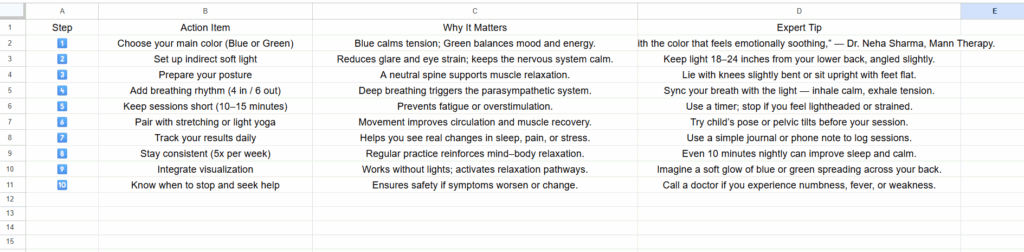
Get a copy of this checklist (100+ people used this checklist to fix lower back pain)
Conclusion
Back pain may start in the body, but it often stays alive in the mind. When your body holds stress, your muscles tense, your breath shortens, and healing slows down. That’s where color therapy steps in not as a cure, but as a calm teacher for your nervous system.
By bathing your space in soothing hues of blue, green, or violet, you send your body a signal it rarely gets in modern life: “It’s safe to relax.” That one shift changes everything your muscles loosen, your heart rate settles, your breathing deepens, and your pain threshold rises.
Color therapy, combined with movement, mindful breathing, and proper posture, transforms into more than a ritual instead of a rhythm of recovery. It serves to rebuild the emotional security that your back has been longing to feel.
Healing isn’t just about fixing pain. It’s about teaching your body how to feel safe again.
So tonight, dim the lights, take a slow breath, and let color guide your calm.
Start with just 10 minutes of a soft blue or green glow, quiet music, and deep breathing. Track how your body responds over time.
If you need structured guidance, Mann Therapy with 20+ years of experience in color-based healing can help you build a safe, personalized plan.
Let color be your reminder: peace heals faster than pressure.
In stillness, your back learns to let go one gentle shade at a time.