Table of Contents
Introduction
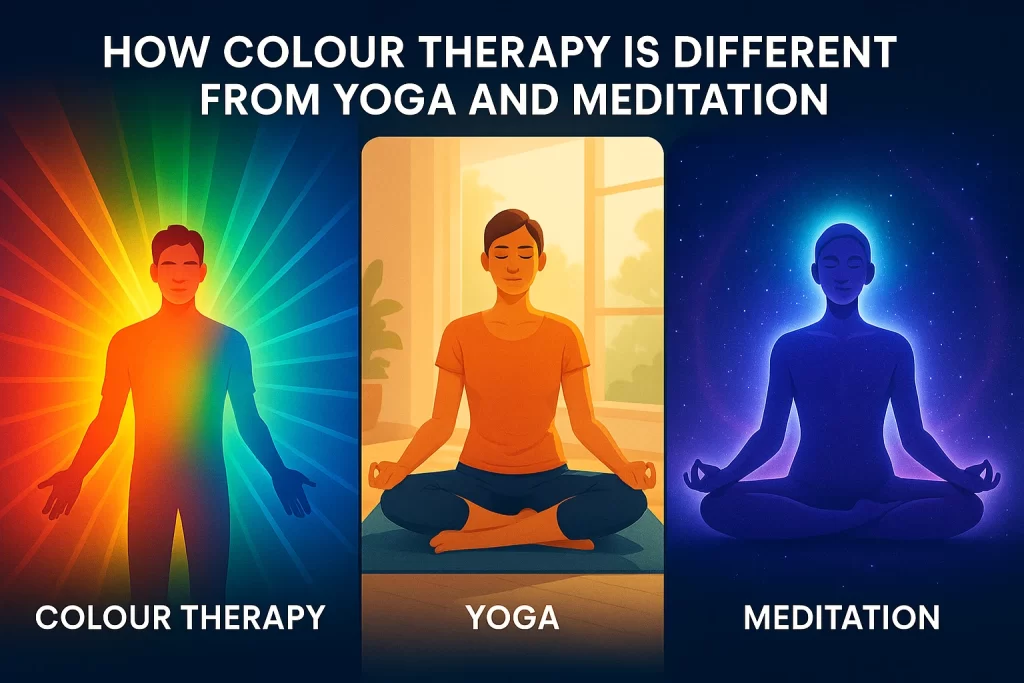
Did you know that colours can shift your mood in minutes, while yoga and meditation often take weeks or months to show results? The wellness movement thrives on options—colour therapy, yoga, and meditation often appear side by side in guides to health.
But look closer, and each practice stands apart. Colour therapy uses light and color for healing, yoga unites body and mind through movement, and meditation sharpens awareness and presence. Knowing the difference between colour therapy and yoga and meditation will allow you to make the most appropriate choice, supported by the history and recent science.
“Research shows that exposure to specific colours can shift stress hormones and brain activity within 10 minutes, while practices like yoga and meditation typically take weeks of consistency to show measurable results.” — Journal of Complementary Therapies in Medicine, 2022
Defining Colour Therapy
Colour therapy, or chromotherapy, uses the spectrum of visible light to shift mood, restore balance, and support healing. Throughout history, ancient civilizations such as Egypt, India, and China harnessed the power of color whether through vibrant rooms or sunlight streaming through gemstones to promote health. Today, modern color therapy utilizes specific shades, often delivered via lights, fabrics, or even visualization techniques, to enhance both physical and emotional wellbeing.
Science shows each color travels at a specific wavelength, which can directly influence hormones and brain waves. Research finds that blue light, for instance, can lower stress hormones and spark theta brainwave activity, which leads to calmness and focus. Red light, in its turn, could be more alert-giving and stimulating to the nervous system. Where yoga and meditation transform the body or mind by action and intent, colour therapy does so by direct senses.
Historical Roots and Modern Science
Colours have always held power. Ancient doctors used colored garments, stones, and painted rooms to support healing. In India and China, colored light often matched the body’s energy centers (chakras or meridians). Modern science is now catching up. Studies confirm that color therapy reduces anxiety and promotes relaxation by shifting brain and hormone activity (see recent clinical research). Modern EEG studies reveal that different hues trigger distinct brain responses, shaping mood and alertness (brain activity and RGB stimulus study).
One major distinction: colour therapy works through the eyes and skin. There is no physical movement or controlled breath; instead, the senses perceive light and color, which then influence mind and body processes.
Core Principles and Common Techniques
- Every color has a frequency: Red energizes, blue soothes, green balances.
- Energy fields matter: Practitioners believe color can tune the body’s aura or subtle energy.
- Common tools: Sessions may use colored LED lights, fabric, water, or visual meditations. The client might sit or relax under lights, look at colored visuals, or wear specific hues. Typical sessions last from 20 to 40 minutes, in clinics or even at home.
For an example of a professional, science-based approach, Mann Therapy offers practical chromotherapy solutions, tailoring color sessions to stress, sleep, or pain issues with guidance from clinical research and expert oversight. Plus Mann Therapy also provides the free colour therapy services in india.
Yoga and Meditation Overview
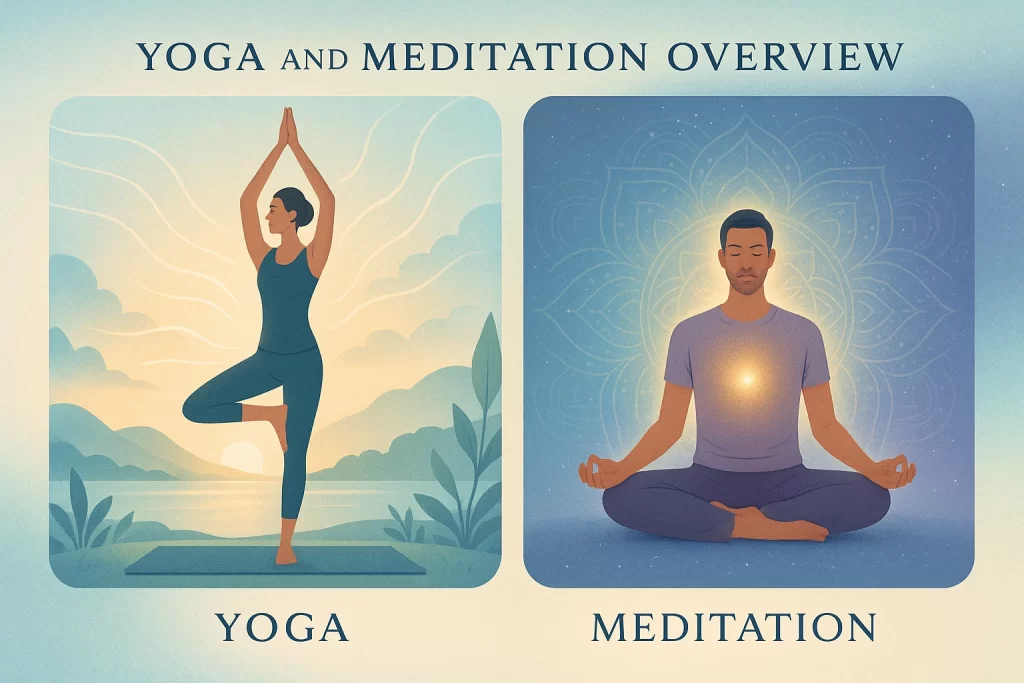
These two often travel together. Yoga originated in India in ancient times as philosophy and practice. It involves physical poses (asanas), breath (pranayama), and occasionally mindless relaxation or philosophy. Meditation, on the other hand, centers on the mind training focus, awareness, or certain imagery through quiet and stillness.
Both yoga and meditation rely on the body and breath. Postures strengthen muscles and joints; breath calms or energizes. Meditation trains attention, shifts awareness, and can foster emotional health over time.
Physical vs Mental Focus
Yoga is about moving and holding the body, often pairing postures with breath. You stretch, strengthen, and open sometimes sweat. Meditation looks inward. It may involve focus on the breath, a mantra, or simply observing thought.
The biggest difference between yoga and meditation lies in their outcomes: yoga enhances your body by boosting flexibility and strength, while meditation primarily brings about a more peaceful and clear mind. Both practices utilize the body as a key instrument for transformation unlike colour therapy, which takes a different approach. This is one of the major differences between Colour Therapy and Yoga.
Typical Practices and Goals
A yoga class usually runs 45–90 minutes. It starts with gentle stretches, then moves through flows or static poses, matched to breathing patterns. The goal: build strength, balance, and calm.
A meditation practice might last 10–30 minutes. It can be silent, guided, or use visualizations or sound. The aim: reduce stress, sharpen focus, and foster emotional balance.
Common outcomes include:
- Better flexibility (yoga)
- Improved stress response (both)
- Enhanced focus and well-being (meditation)
Quick Statistics Table: Colour Therapy vs Yoga & Meditation
| Practice | Average Time to Notice Effect | Evidence Source |
| Colour Therapy | 10–20 minutes (blue/green light lowers cortisol, induces calm) | National Center for Biotechnology Information (NCBI), 2021 |
| Yoga | 6–8 weeks of consistent practice improves flexibility & reduces stress | Harvard Health Publishing, 2020 |
| Meditation | 8 weeks of mindfulness practice alters brain structure & reduces anxiety | Harvard Gazette, 2018 (MBSR study) |
Key Differences Between Colour Therapy and Yoga/Meditation
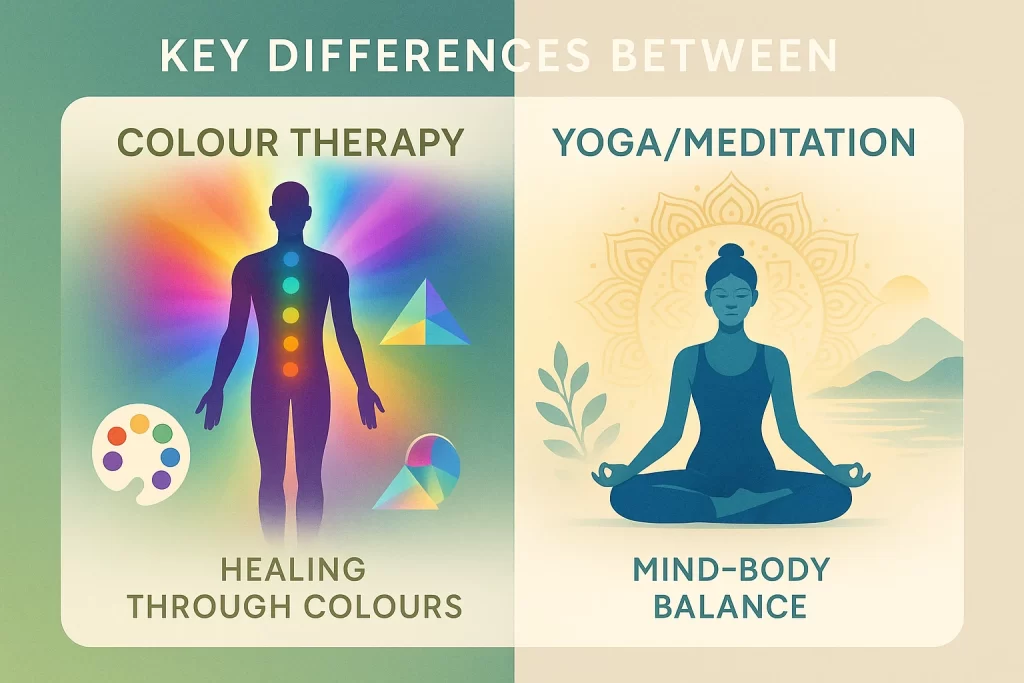
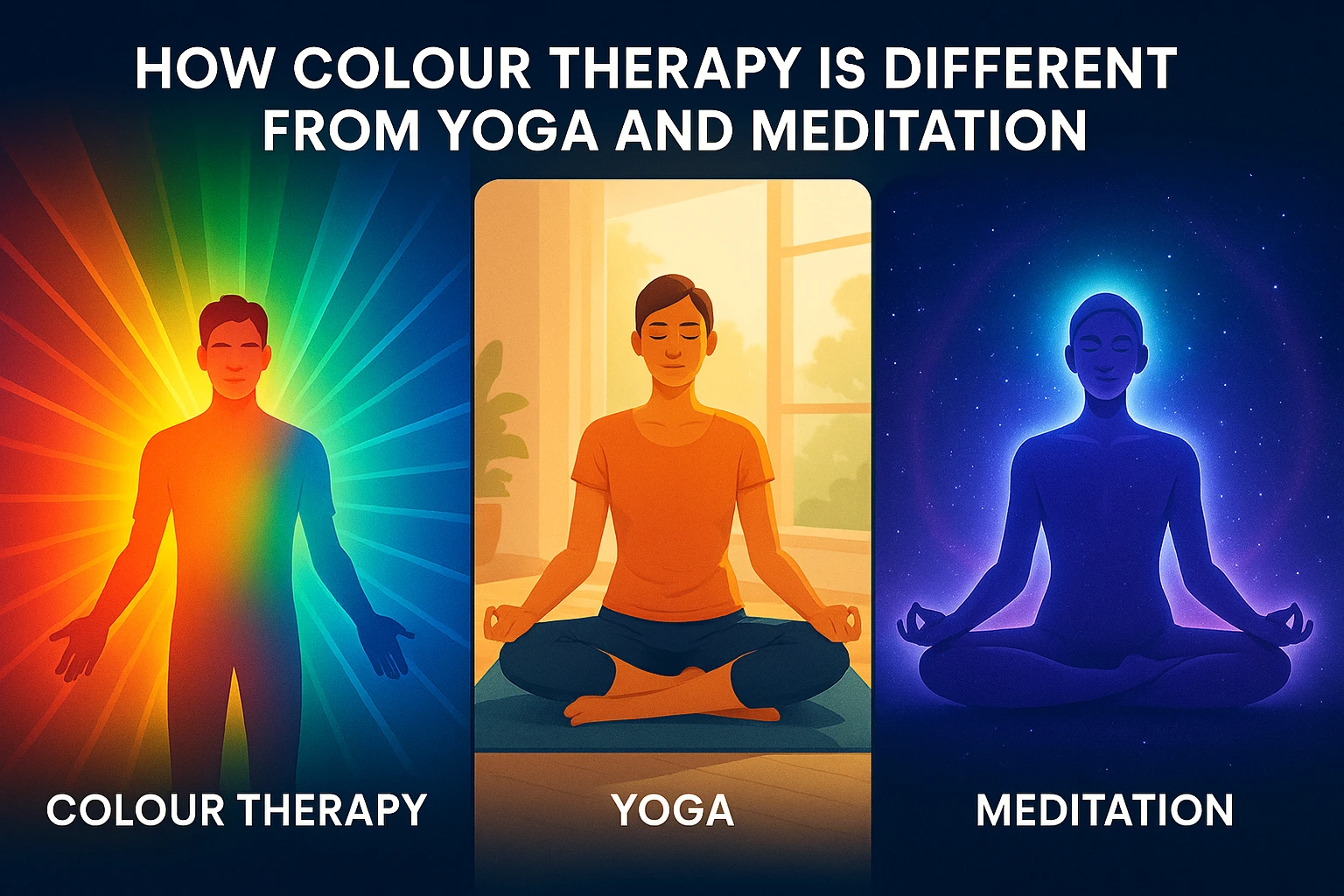
Wondering exactly how colour therapy is different from yoga and meditation? Here’s a direct comparison.
Mechanism of Action
- Colour Therapy: Works through visual pathways. Colored light stimulates the optic nerve, influencing brain wave patterns and hormone secretion almost instantly (further reading).
- Yoga: Uses physical movement, breath, and sometimes philosophy to impact flexibility, nerve tone, and emotional regulation.
- Meditation: Relies on mental focus, attention training, or visualization to bring about mental clarity and emotional steadiness.
Colour therapy involves external stimulus, while yoga and meditation both require active participation from the practitioner’s body or mind.
Benefits and Outcomes
Colour Therapy:
- Fast mood shifts and stress relief
- Useful for acute anxiety or sleep issues
- Can be simple to use at home
- Suitable for those who struggle with movement or sitting still
Yoga:
- Builds strength, flexibility, and balance
- Reduces stress and muscle tension
- Boosts overall physical health
Meditation:
- Trains focus and mindfulness
- Helps emotional regulation
- May reduce chronic pain, improve sleep, and lessen stress
Many benefits overlap: all support a calm mind and better stress management.
Integration and Complementary Use
Some practitioners blend these methods. A yoga studio may use colored lighting to deepen relaxation, or a meditation app might guide users to picture calming colors.While integration is optional, each method brings its own unique benefits. Mann Therapy focuses on color-based solutions, but it can also enhance your existing yoga and meditation practices.
| Feature / Focus | Colour Therapy | Yoga | Meditation |
| Main Mechanism | Light & color affect brain waves + hormones | Postures, breath, and body movement | Mind training via focus/awareness |
| Time to Effect | Immediate (minutes) | Gradual (weeks/months) | Gradual but lasting (weeks/months) |
| Tools Needed | Lights, fabrics, visualizations | Mat, props (optional) | Quiet space or app |
| Best For | Quick mood shifts, sleep, anxiety | Flexibility, strength, stress relief | Focus, emotional regulation |
| Accessibility | Very easy (all ages) | Moderate (depends on mobility) | Easy (but requires discipline) |
Expert Insights, Case Studies, and FAQs
Expert Opinion
Dr. Sara Mann, certified in chromotherapy, states: “Color therapy’s immediate impact on mood is invaluable for clients needing fast relief. It works through direct sensory input—no special skill required. Yoga and meditation have a slower build but offer sustainable mind-body integration. I recommend color therapy for acute stress, while yoga and meditation fit better for long-term growth or physical needs.”
Yoga instructor Emily Hart adds, “Yoga’s strength lies in the power of active engagement. It’s great for clients who need movement to process emotions. If someone feels stuck or restless, yoga’s combination of breath and posture unlocks balance. When used together, the effects multiply.”
Case Study Highlights
Case 1: A young professional struggling with sudden anxiety found that short sessions of blue and green light at Mann Therapy eased panic faster than mindfulness meditation. Within ten minutes, her heart rate dropped and focus returned—allowing her to return to work calmly.
Case 2: A retiree with chronic back pain attended gentle yoga classes for six months. While colored lights soothed his mood, only regular yoga practice restored flexibility and reduced his daily pain.
Wellness Practice Selection Checklist (bonus)
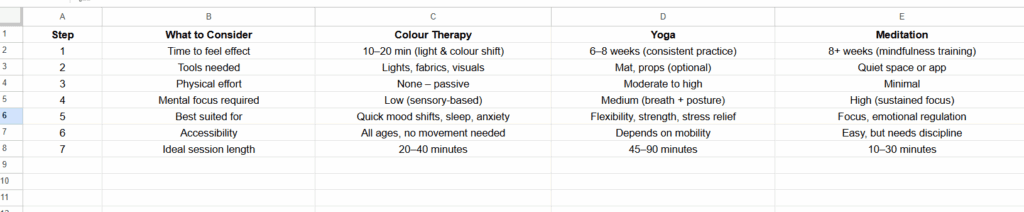
Get a Copy Of This Checklist
Frequently Asked Questions
Is colour therapy with lights safe?
Yes. Most sessions use low-intensity, visible-spectrum lights. Direct eye exposure to strong lasers or UV rays should be avoided, but clinical chromotherapy is safe for most.
Who can use colour therapy?
Children, adults, and seniors can all benefit. Sessions are gentle enough for most ages and abilities.
How does the cost compare to yoga or meditation?
Colour therapy is often affordable, especially for home devices. Some clinics, like Mann Therapy, offer personalized plans with professional guidance.
Can I use colour therapy, yoga, and meditation together?
Yes. Many practitioners combine them for better results, but each stands alone and does not need the others to work.
Is the science behind colour therapy credible?
Modern studies back its effect on stress, brain waves, and even sleep (see the science). More studies are underway, but early results are promising.
Conclusion
Colour therapy is different from yoga and meditation in clear ways: it works through light and sensory pathways, while the others rely on movement, breath, or mind training. Quick to use and accessible to all, color therapy can lift moods and calm anxiety in minutes, as seen at clinics like Mann Therapy.
Yoga and meditation suit those seeking deeper mind-body change or fitness, building results over time. The best wellness plan? Mix and match, or lean into the method that works best for your needs. Explore both color and movement for a routine that keeps you balanced and bright.
For More Information Click On The Button:-